Gastroenterology & Endoscopy Specialist in Christchurch
MD(Hons) MMedSc FRACP
Gastroenterologist | Interventional Endoscopist
Clinical Senior Lecturer, University of Otago
I am a New Zealand trained Gastroenterologist with 3 years of focussed advanced endoscopic training in leading centres in Australia and Canada. In addition to private practice, I am a consultant Gastroenterologist at Christchurch Hospital, and routinely perform diagnostic and complex endoscopic procedures. I pride myself on delivering high-quality, personalised care that puts the patient’s well-being first.
Our Commitment to You
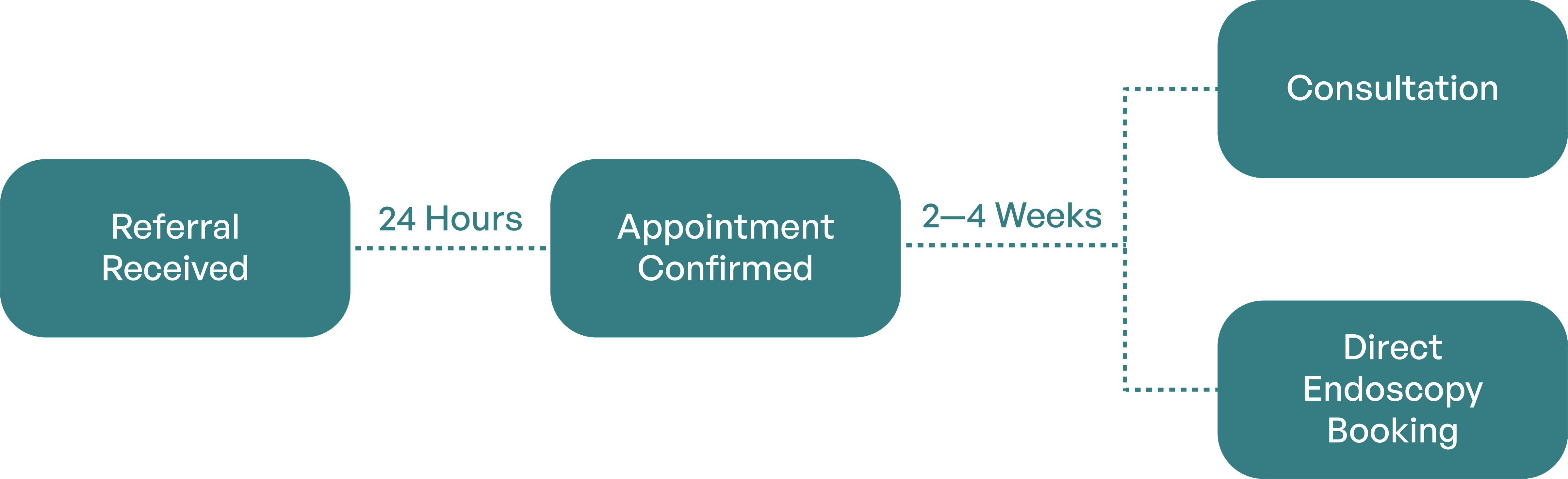
Rapid Response: We aim to move from your initial referral to a booked appointment within 24 hours.
Proactive Coordination: If diagnostic scans or laboratory tests are required, these are requested and arranged directly from your referral to ensure your consultation is as comprehensive as possible.
Efficient Pathways: Typically within 2–4 weeks, you can expect to undergo your consultation or proceed with a direct-access Gastroscopy or Colonoscopy if clinically appropriate.
Expedited Care & Specialist Excellence
Consultations
Comprehensive consultations to investigate new symptoms, or manage chronic conditions offered:
In-person: At our St Albans clinic
Telehealth: Available at request
We aim to book appointments within 1 business day
Consultations:
Location: Level 2, 21 Caledonian Rd, St Albans Christchurch
Our clinic rooms are designed to be light, airy, and welcoming. From the moment you arrive, our goal is to ensure you feel like a guest in a calm, professional environment. Here, we will discuss your medical history, symptoms, and diagnostic options in a relaxed and confidential setting.
Endoscopy Procedures:
Location: Level 1, 21 Caledonian Rd, St Albans Christchurch
All procedures are performed at the Southern Endoscopy Centre, a modern, state-of-the-art purpose-built facility, specifically designed for patient comfort and clinical excellence, featuring up-to-date diagnostic equipment and a team of highly trained clinical staff.
We believe in utilising every available technological advancement for our patients' benefit. By performing procedures in this advanced environment, we can integrate high-definition imaging and real-time Artificial Intelligence (AI) as a standard part of our diagnostic process. Our goal is to provide highly effective endoscopy with the most accurate results possible, ensuring world-class care for every patient.
Endoscopy Procedures
We offer a range of diagnostic and therapeutic endoscopy procedures using high-definition imaging and advanced technology.
Colonoscopy
A colonoscopy is a medical procedure where a specialist uses a thin, flexible camera to examine the entire lining of the large bowel (colon). It is the most effective way to remove polyps, helping to prevent bowel cancer before it starts.
Gastroscopy
A gastroscopy uses a thin, flexible telescope to look directly at the lining of your upper digestive tract. It is the most accurate way to find the cause of symptoms like persistent heartburn, swallowing issues, or upper abdominal pain.
Capsule Endoscopy
Capsule endoscopy uses a tiny wireless camera inside a vitamin-sized pill to take thousands of images as it passes through your digestive tract. It is the primary tool for examining the small bowel—an area that cannot be easily reached by traditional gastroscopy or colonoscopy.
Oral Balloon Enteroscopy
This is a more specialised endoscopic procedure, used for reaching parts of the upper small intestine that are inaccessible via standard Gastroscopy.
Rectal Balloon Enteroscopy
This is a more specialised endoscopic procedure, used for reaching parts of the lower small intestine that are inaccessible via standard Colonoscopy.
Wondering what your symptoms mean?
We've created plain-English guides covering common GI symptoms, conditions and treatments - specifically for patients in Canterbury
We are an Affiliated Provider with Southern Cross and a nib First Choice Provider




Practice info
GET IN TOUCH
Ask for Melissa
P. (03) 968 3140
E. info@canterburyendoscopy.co.nz
CLINIC
Level 2, 21 Caledonian Rd, St Albans, Christchurch 8014

